Most Spark applicants have raw talent and creative vision. The ones who get selected also have a plan — a cohesive project identity, polished tracks, and the ability to show Suno exactly why their music deserves investment.
On June 25, 2026, Suno launched Spark, an incubator program designed to support the next generation of independent artists. With $400M in Series D funding at a $5.4B valuation, Suno is putting serious resources behind independent creators. If you're planning to apply, this guide walks you through building a project that stands out — using AI prompt engineering, structured song analysis, and professional-grade lyrics tools.
What Is Suno's Spark Program?
Spark is a paid incubator for unsigned, independent artists who use Suno as part of their creative process. Think of it as a record label advance without the label — you keep full creative control and commercial rights to your work while Suno provides the resources to help you level up.
Selected artists receive:
Project funding: Grants to support your music, creative projects, and releases
Marketing support: Promotional resources to grow your audience across Instagram, TikTok, YouTube, and streaming platforms
Industry mentorship: Writing camps with professional artists and access to established music video directors
Editorial opportunities: Featured placements, campaigns, and artist spotlights across Suno's platform
Engagement rewards: Incentives for community participation and growing on Suno
Dedicated guidance: A Suno partner manager for personalized support from start to finish
Platform benefits: Early access to upcoming tools, free Suno Premier, and song credits
The requirements are straightforward: be at least 18, release music under your own artist name, stay unsigned and independent, and commit to creating 1 to 12 songs that live on Suno — promoted through your social channels. Suno needs to be involved in the creative process, but it doesn't have to be 100% AI-generated. Idea generation, experimentation, alternate versions, or production support all count.
If you're not on Suno yet, grab an account via our invite link — you'll get started with extra credits, and we'll earn credits to keep testing and sharing what works.
What Spark Judges Are Actually Looking For
Suno hasn't published a scoring rubric, but the program requirements and language give us clear signals. Here's what the selection team is almost certainly evaluating:
Cohesive project identity, not random songs. The program asks for "a minimum of 1 song to a maximum of 12 songs" — that's a project, not a playlist. Your tracks should feel like they belong together. Same sonic universe, same artistic vision, same level of polish from first track to last.
Production quality and originality. "High-quality, original projects that follow our ToS" is direct language from the Spark FAQ. This isn't about having a million-dollar studio. It's about intentionality — deliberate genre choices, clean arrangements, lyrics that sound like they came from a person, not a template.
Clear artistic vision with growth potential. Suno wants artists they can invest in long-term. Your application should communicate who you are as an artist today and where you're going. What's your sound? What story are you telling? Why now?
Social media presence and promotional ability. The program requires promotion across Instagram, TikTok, and YouTube. Spark wants artists who can amplify their own reach. You don't need a massive following — you need to show you understand how to connect with an audience.
Step 1: Craft Your Project Vision with Structured AI Prompts
Before you generate a single track, define your project's identity. The artists who stand out in Spark applications have a clear answer to three questions: genre, mood, and concept.
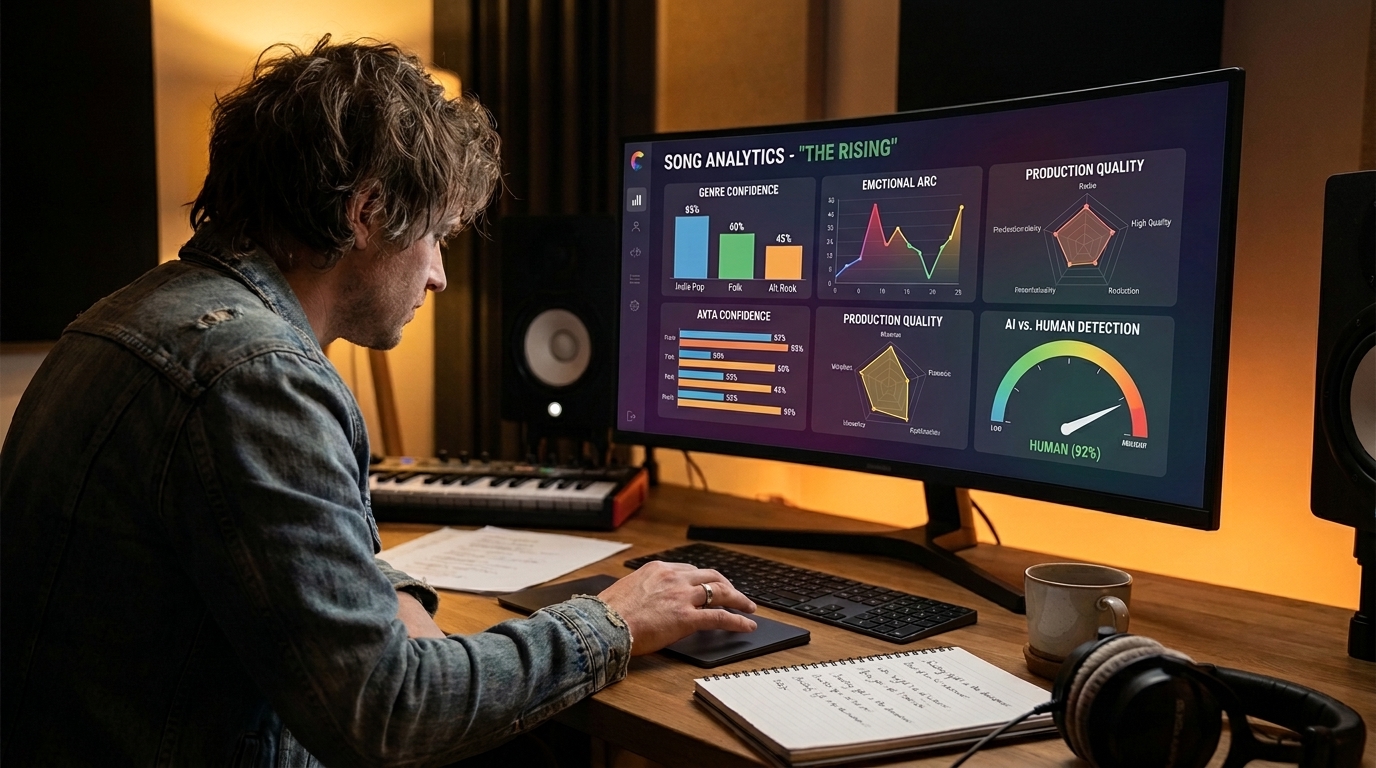
Generic prompts produce generic songs. "A pop song about love" gives you a pop song about love. It won't feel like your pop song about love. Structured prompts — the kind that specify genre subcategories, tempo, instrumentation, vocal style, and emotional arc — produce output that sounds intentional.
Here's the difference:
Weak: "Make a sad indie song about growing up"
Strong: "Dream pop with shoegaze textures, 85 BPM, breathy female vocals layered with reverb, melancholic but hopeful, theme: leaving your hometown. Reference: Beach House meets Alvvays. Structure: intro pad swell → verse (minimal drums) → chorus (wall of sound guitars) → bridge (stripped back, only piano) → outro fade."
The second prompt gives the AI constraints. Constraints create personality. If every track in your Spark project follows a prompt template this specific, your project will have a cohesive sonic identity — and that's exactly what the selection team wants to see.
To build your project's prompt template, start with our AI Prompt Generator. It structures genre, mood, language, and song structure into production-ready prompts you can iterate on.
Step 2: Iterate Songs with Precision — Consistency Is Everything
One great track is luck. Five great tracks with the same sonic DNA is skill. The Spark selection team can tell the difference.
Once you've defined your prompt template from Step 1, use it as the foundation for every track in your project. Keep the core elements locked — genre, tempo range, vocal style — and vary the mood, theme, and song structure per track. This gives you variety within a recognizable identity.
For example, if your project is a synthwave concept album about a road trip across the American Southwest:
Track 1: Same synthwave template, mood: anticipation, structure: short intro → driving beat
Track 2: Same template, mood: freedom, structure: extended instrumental bridge with guitar solo
Track 3: Same template, mood: melancholy, structure: stripped back, only pads and whispered vocals
Three tracks, three emotions, one unmistakable sonic identity. The AI generates the music, but you're the one directing the emotional arc of the project.
Not on Suno yet or want to maximize your generation credits? Use our invite link to sign up and get started with bonus credits.
Step 3: Analyze Your Tracks — Production Quality Matters
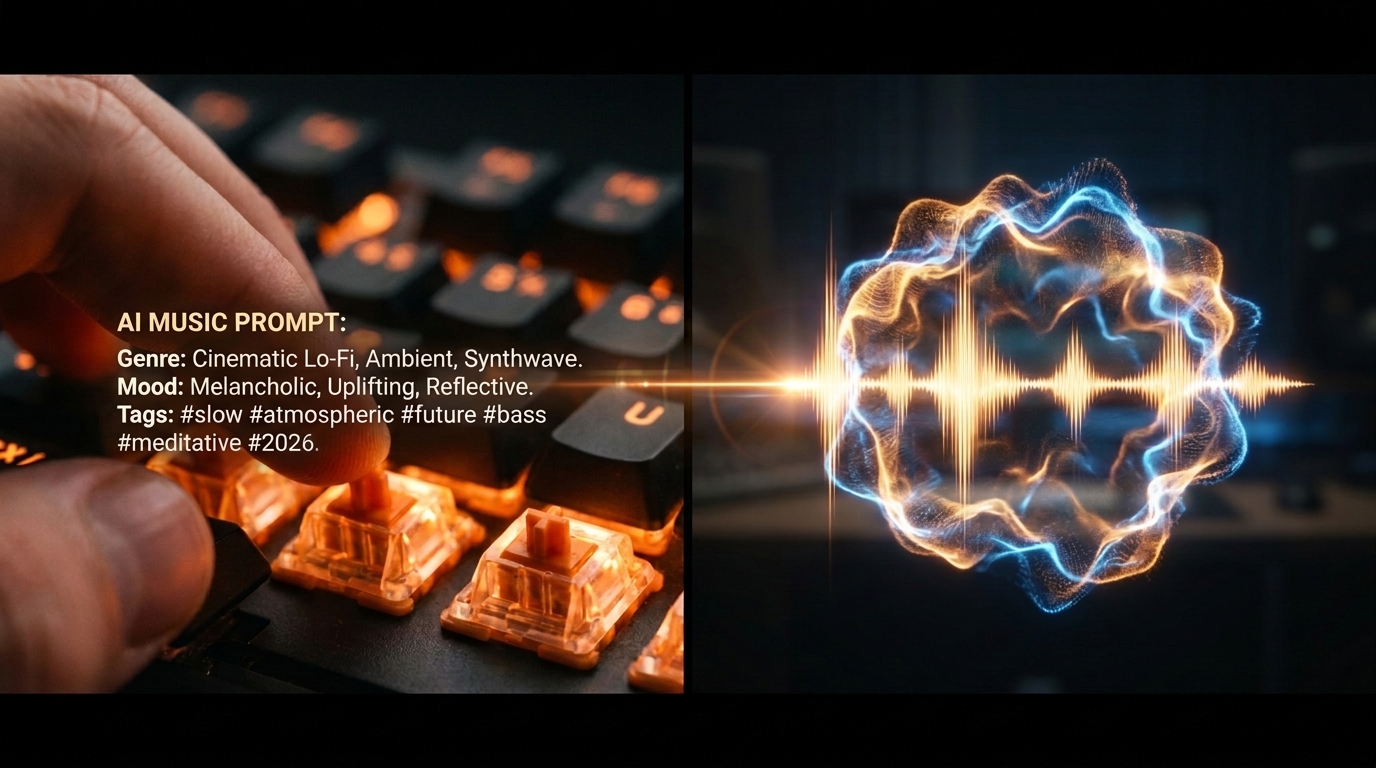
Spark asks for "high-quality, original projects." You can't improve what you don't measure. Before submitting, run every track through a song analysis workflow to check:
Production quality scores: Does the mix sound professional? Are there frequency imbalances? Is the stereo field used effectively?
Genre confidence: Does the AI classification match your intended genre? If your "synthwave" track reads as "generic pop," your prompt needs adjustment.
Emotional arc: Does the track's energy and mood progression match the story you want to tell?
AI vs. Human detection: Suno knows you're using AI — they require it. But understanding where your tracks fall on the detection spectrum helps you identify areas where you can add more human-feeling elements.
The Song DNA Analyzer gives you a detailed breakdown of every track — genre confidence, production scores, structural analysis, and AI detection markers. Use it to audit your project before you submit. Fix weak tracks. Replace generic ones. Only send your best work.
Step 4: Write Lyrics That Connect — No Filler, No Clichés
AI-generated lyrics have a tell: they're often grammatically perfect but emotionally hollow. Lines like "we'll dance until the morning light" or "together we can chase our dreams" are flags that nobody actually wrote this.
Spark judges — and listeners — connect with specificity. "The streetlights on 14th and Vine flicker when it rains" hits harder than "walking through the city at night." One is lived experience. The other is a stock photo in word form.
Here's how to approach lyrics for your Spark project:
Start with AI generation for structure and rhyme schemes — the Write Lyrics tool gives you verse/chorus/bridge frameworks in seconds
Rewrite the details yourself. Replace every generic image with something specific from your own life. AI builds the scaffolding; you hang the art.
For vocal tracks, use melody-to-lyrics matching. If you have a melody — hummed, played, or generated — the Melody to Lyrics tool fits words to your melodic contour so the phrasing sounds natural, not forced.
The strongest Spark applications will include at least one track where the lyrics clearly came from a human experience, not a language model. Tools accelerate the process. You provide the soul.
Step 5: Polish and Present Your Application
You've built your project. Now package it so the Spark selection team can see your vision in 30 seconds or less.
Create a simple portfolio page or document that includes:
Artist bio (2-3 sentences): Who you are, your sound, what you're building toward. No "I've loved music since I was a child." Start with your project concept.
Project description (3-4 sentences): The concept, the sonic identity, the story arc. What's the project about and why does it need to exist?
Track listing with notes: For each song, include the title, genre, mood, and a one-line description of its role in the project's emotional arc.
Links to your best 2-3 tracks on Suno: Lead with your strongest work. One weak track can sink an otherwise solid application.
Social proof: Links to your Instagram, TikTok, YouTube. Even small followings matter if your content shows effort and consistency.
Video content is specifically called out in the Spark requirements — each song must be promoted via at least one social video. If you haven't made video content before, start now. A 30-second clip of your track with a simple visualizer or you talking about the song's meaning counts. Show the selection team you understand how to promote music in 2026.
The Independent Artist's AI Toolkit
Building a Spark-worthy project solo is demanding. These tools handle the technical heavy lifting so you can focus on creative decisions:
Tool | What It Solves | Use It For |
|---|---|---|
Prompt Generator | Vague prompts → structured, production-ready inputs | Step 1: Project vision and template creation |
Song DNA Analyzer | Blind creation → data-backed quality auditing | Step 3: Track quality and genre consistency checks |
Write Lyrics | Blank page → structured verse/chorus/bridge | Step 4: Lyric scaffolding and rhyme structure |
Melody to Lyrics | Disconnected words → melody-matched phrasing | Step 4: Natural vocal phrasing for melodic tracks |
All four tools are free to use at Song AI Farm. No account required to start — create one when you're ready to save and iterate on your project.
What If You Don't Get In?
Spark is competitive, and Suno is selecting artists who fit a specific profile. If you don't get accepted on your first application, the project you built applying is still yours. You have a cohesive body of work, production experience, and a clearer understanding of your artistic identity.
Publish the project on Suno anyway. Promote it. Grow your audience. Apply again. Many successful independent artists got where they are by treating rejection as iteration — the same way you iterate on a prompt until the output is exactly right.
FAQ
What is Suno's Spark Program?
Spark is a paid incubator for independent artists launched by Suno in June 2026. Selected artists receive project grants, marketing support, industry mentorship, editorial features, and dedicated partner manager guidance — all while retaining full creative and commercial rights to their music. Apply on the official Spark page.
How do I apply to Suno Spark?
Applications are submitted through the Spark Google Form. You'll need to be 18 or older, unsigned, releasing music under your own artist name, and prepared to create 1-12 songs that use Suno in the creative process. If you're not on Suno yet, sign up via our invite link for bonus credits.
Can AI-generated music qualify for Suno Spark?
Yes. Suno explicitly requires that their platform be part of your creative process — whether for idea generation, experimentation, alternate versions, or full production. The program is designed for artists who work with AI tools. What matters is the quality, originality, and cohesiveness of your project, not what percentage was AI-generated.
What makes a Spark application stand out?
A cohesive project identity across all tracks, deliberate production choices, original lyrics with personal specificity, and evidence that you understand how to promote your music on social media. Random collections of songs — even high-quality ones — will not perform as well as a project that tells a clear story. Use analysis tools to audit your tracks and structured prompts to maintain consistency across your entire project.
Do I need to be a Suno Pro or Premier subscriber to apply?
Spark doesn't require a paid subscription to apply, but selected artists receive free Suno Premier and additional song credits as part of the program. If you're accepted, you'll have the tools you need regardless of your current plan. Start with a free account and upgrade if you need more generation capacity during your project build.
Ready to build your Spark application project?
Start with a professional AI prompt, analyze your tracks for quality, and write lyrics that connect. Try the Prompt Generator — Free